Why do marketers care so much about funnel pricing before buying a product?
In the world of digital product launches, the price shown on the sales page is often just the starting point.
Most marketing products follow a funnel structure. That means buyers enter through a front-end offer and are then presented with optional upgrades known as upsells or OTOs (one-time offers).
For experienced marketers, understanding the entire funnel matters. A $17 entry point may appear inexpensive, but the full value of the product depends on what is included in the core package and how the optional upgrades fit into the overall system.
That is why search queries such as “pricing breakdown,” “OTO structure,” and “funnel analysis” are common when new products launch.
People want clarity before making a decision.
What is the front-end price of Solo Ads Freedom Stack?
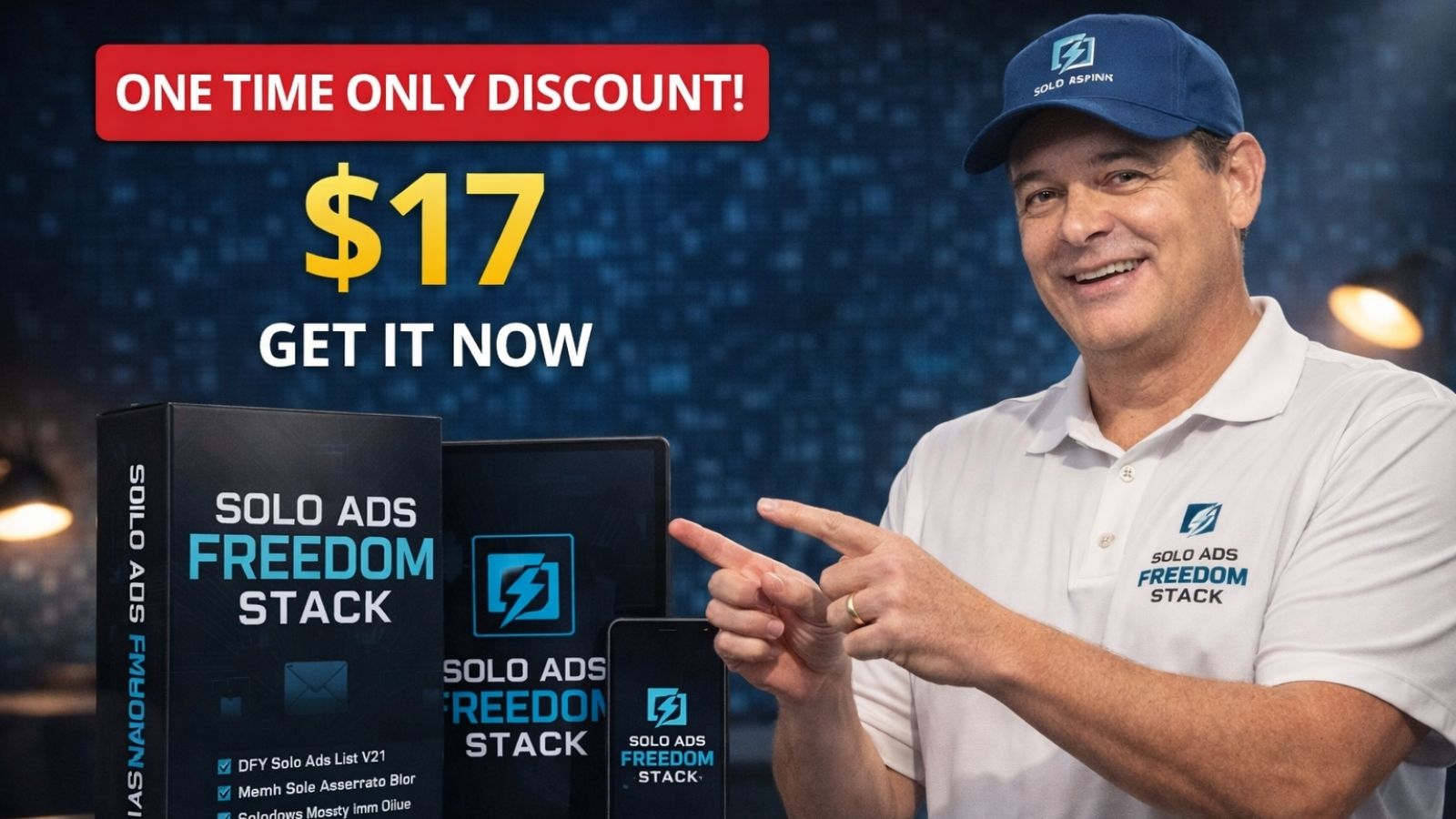
The front-end offer for Solo Ads Freedom Stack is priced at $17 during the launch period.
This entry-level price provides access to the core training material and several supporting resources.
According to the official product information, the core package includes a number of practical tools designed to help marketers approach solo ads more systematically.
These include a vendor list intended to help users identify potential solo ad providers, a traffic budget calculator, a structured 90-day action plan, and a set of email swipe templates.
The idea is to provide a foundation for beginners who want to understand how solo ad campaigns work before scaling their efforts.
In many product launches, the front-end price is deliberately kept low so that buyers can evaluate the material without committing to a larger investment immediately.
What upgrades or OTOs exist in the funnel?
Like many products in the affiliate marketing ecosystem, Solo Ads Freedom Stack includes several optional upgrades.
The available upsells expand on the core system and introduce additional resources or training elements.
Based on the product documentation, the funnel includes several price points beyond the initial $17 offer.
Some upgrades introduce deeper training modules, while others add specialized tools or additional traffic strategies.
For buyers evaluating the funnel, the key point to remember is that these upgrades are optional. The core training can still be accessed through the front-end purchase alone.
Understanding the entire funnel can be helpful, however, because it allows potential buyers to decide in advance whether the additional components are relevant to their marketing strategy.
A full breakdown of the funnel, upsell structure, and bonus components is discussed in greater detail here:
explore the complete Solo Ads Freedom Stack pricing and OTO breakdown
Why do many marketing products use upsell funnels?
Upsell funnels exist for several practical reasons.
First, they allow creators to offer a low entry price while still supporting the development and maintenance of the product ecosystem.
Second, they give buyers the flexibility to choose how deeply they want to engage with the system.
Some marketers prefer to purchase only the core training. Others want advanced tools or extended frameworks that go beyond the basics.
By structuring the product this way, creators can accommodate both types of buyers.
From a buyer’s perspective, the most important thing is transparency. When the funnel structure is clearly outlined, it becomes easier to evaluate whether the additional upgrades provide value.
Is the front-end offer enough on its own?
For beginners exploring solo ads for the first time, the front-end package may provide a sufficient starting point.
It introduces the basic mechanics of the strategy and explains how to approach vendor selection, campaign testing, and email follow-up.
These concepts are essential because many failed solo ad campaigns occur when marketers skip the testing phase and attempt to scale immediately.
The training attempts to emphasize a slower, more controlled approach.
More advanced marketers may find value in some of the upgrades, especially if they are interested in expanding their traffic strategies or automating parts of their workflow.
However, whether those upgrades are necessary depends largely on individual experience levels and marketing goals.
How should buyers evaluate the value of a marketing product?
When deciding whether a product is worth purchasing, marketers often consider several factors.
First, they examine whether the content addresses a real problem they are currently facing.
Second, they look at the credibility of the creators and their experience in the niche.
Third, they consider whether the pricing structure feels reasonable relative to the value of the material.
In the case of Solo Ads Freedom Stack, the low front-end price reduces the barrier to entry, which can make it easier for curious marketers to explore the concept of solo ads without committing a large budget immediately.
However, as with any educational product, the true value ultimately depends on whether the buyer implements the strategies presented.
Why is pricing transparency important in the affiliate marketing space?
Transparency builds trust.
When marketers clearly understand what they are purchasing and how optional upgrades work, they can make more confident decisions.
Hidden costs or unclear funnel structures tend to create frustration, especially among beginners who are still learning how product launches operate.
A transparent pricing model, combined with a refund policy, gives buyers the freedom to evaluate the material and decide whether it aligns with their goals.
That clarity often leads to more informed purchases and fewer misunderstandings later.